
Introduction:
Welcome to our solar system blog, where we provide valuable insights and guidance for DIY enthusiasts. In this comprehensive guide, we’ll explore the crucial aspects of building your own off-grid solar system. One often overlooked but vital component is the bus bar. Choosing the right bus bar is essential for optimizing the efficiency and ensuring the safety of your DIY solar project. Let’s delve into the key considerations when selecting a bus bar for your off-grid solar system in RV or Yacht.

1. Understanding the Role of the Bus Bar in Your Off-Grid Solar System
A solar system consists of various components, and the bus bar plays a critical role in connecting and distributing electrical power. We’ll explore the purpose and importance of the bus bar in an off-grid solar setup. Additionally, we’ll discuss how the bus bar facilitates efficient power distribution and interconnection.

Ready to harness the power of renewable energy in your off-grid solar system? Discover the important factors to consider when choosing the right bus bar.
2: Factors to Consider When Choosing a Bus Bar
Selecting the appropriate bus bar requires careful consideration of various factors. We’ll discuss the importance of electrical conductivity and current carrying capacity in maximizing the efficiency of your solar system. Additionally, we’ll explore different bus bar materials, designs, and configurations to help you make an informed decision.

This bus bar comes with a plastic cover, six studs, and zinc-plated stainless steel bolts and nuts. It’s rated for 450 amps, 300V AC/48V DC, a conservative estimate according to your tests. Made from solid copper, it’s significantly thicker and wider, providing a robust and reliable connection. Its construction ensures that the bus bar won’t overheat, making it suitable for high-amp applications. This bus bar seems to be an excellent fit for setups with high-capacity batteries, such as Jackery batteries solar panels, which can discharge up to 450 amps in total.
Are you ready to make an informed decision about the bus bar for your off-grid solar system? Let’s explore the crucial considerations in the next section.
3. Ensuring Safety and Efficiency in Bus Bar Selection for Off-Grid Solar Systems
Safety should always be a top priority when working with electrical components. In this section, we’ll discuss the importance of electrical safety in choosing the right bus bar. We’ll explore installation guidelines, grounding techniques, and protective measures to ensure a safe and reliable off-grid solar system. Additionally, we’ll emphasize the significance of bus bar insulation and protection against voltage drops and heat dissipation.
Installation Guidelines:
- Secure Mounting: Ensure that the bus bar is securely mounted in a designated area, keeping it clear of any potential obstructions. Use appropriate fasteners to firmly attach the bus bar to the mounting surface, providing stability and preventing movement.
- Adequate Ventilation: Proper ventilation around the bus bar is essential to dissipate heat effectively. Adequate spacing and ventilation allow for heat dissipation and help maintain the bus bar’s optimal operating temperature.
- Proper Insulation: Insulate the bus bar to prevent accidental contact with live electrical components. Use insulating covers or sleeves to shield exposed bus bar sections, reducing the risk of electrical shocks and ensuring safety during maintenance or troubleshooting.
- Neat and Organized Wiring: Arrange and organize the wiring connected to the bus bar in a neat and orderly manner. Properly label and route the cables to minimize the risk of accidental short circuits or tangled wires, making future maintenance and troubleshooting more manageable.

Grounding Techniques:
- Grounding Bus Bar: Establish a solid grounding connection for the bus bar to protect against electrical faults and minimize the risk of electrical shock. Connect the bus bar’s grounding terminal to a designated grounding point, such as a grounding rod or grounding system, following local electrical codes and regulations.
- Grounding Conductors: Ensure that all grounding conductors, such as the bonding wire, are securely connected to the bus bar and the grounding system. Use appropriate connectors and ensure proper electrical continuity to establish an effective grounding path.
- Grounding Integrity: Regularly inspect the grounding connections for corrosion, loose connections, or damage. Maintain a solid grounding integrity by cleaning and tightening the grounding conductors and connections as needed. Periodically test the grounding system to verify its effectiveness.
- Surge Protection: Install surge protection devices, such as surge arresters or transient voltage suppressors, to safeguard the bus bar and the entire off-grid solar system against voltage spikes and transient events. These devices divert excessive voltage and protect sensitive components from potential damage.
Safety should always be a priority in your off-grid solar system. Learn the best practices for choosing a safe and efficient bus bar by moving on to the next section.
4: Choosing the Right Bus Bar for Your Off-Grid Solar System
In this section, we’ll delve into the process of selecting the right bus bar for your specific off-grid solar system. We’ll discuss bus bar specifications and types. Furthermore, we’ll explore the cost-effectiveness of different options and highlight the importance of bus bar maintenance for long-term performance and reliability.
Brass Bus Bar Specification
- Max、Voltage:300V AC/48V DC
- Continuous Rating:150A /300A/450A DC
- Body: Nylon glass fiber reinforced.
- Bus Material: Brass. nickel plated
- Studs & Hardware: Stainless steel.
- Cover: Transparent. Include
- Terminal Stud:M6(1/4′) or M8(5/16′)
- Screw: M4
We have a cheaper option that comes in a black and red kit. Although it’s rated for 150 amps, this bus bar tends to overheat, calling its rating into question. The brass construction is thinner, and the bus bar relies on two small screws for its connection to the plastic housing. Given these characteristics, this bus bar is suitable only for light, low-amp applications.
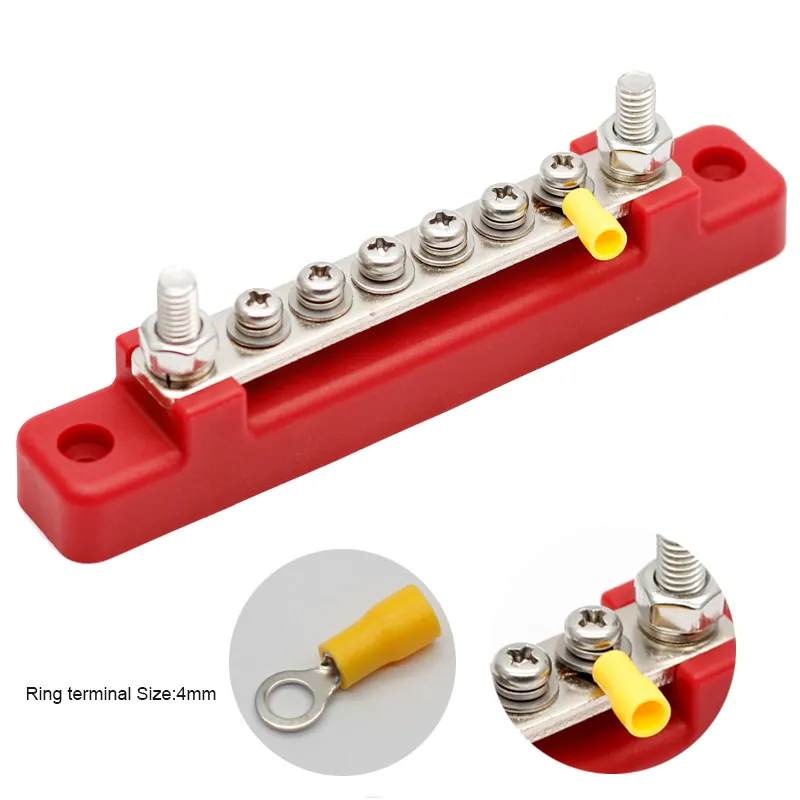

Ready to find the perfect bus bar for your off-grid Solar energy system? Discover tips for selecting the right bus bar based on your specific requirements and preferences.
Conclusion: Congratulations on taking the first steps toward building your DIY off-grid solar system. By carefully choosing the right bus bar, you can optimize efficiency and ensure safety. Each section of this guide has provided crucial information on bus bar selection, its role, safety considerations, and maintenance. Armed with this knowledge, you’re well-prepared to embark on your sustainable off-grid solar journey.
Start planning your DIY off-grid solar system today! Explore our blog for more valuable insights and practical tips to help you achieve your renewable energy goals.
Note: Building an off-grid solar system involves electrical work and may require permits or professional assistance. Always consult certified electricians or professionals when working with electrical components and systems to ensure safety and compliance with local regulations.


